What to include in senior dog wellness exams: 5 clinical assessments for vets
What to include in senior dog wellness exams: 5 clinical assessments for vets
by Lisa Lippman, DVM, Monica Tarantino, DVM, and Lauren Adelman, DVM, DACVIM (SAIM)
Senior pets currently represent 30% to 40% of the patient population. This percentage is expected to grow as advancements in veterinary healthcare and awareness of senior pet needs increase. It is imperative that we take steps to maintain a pet's quality of life in concert with the developments that lead to their longer lifespan. Conducting the right age-specific assessments, screenings, and caregiver education during this transitional period of a dog’s lifespan is key to maintaining their quality of life through the geriatric stage when age-related diseases are significantly more prevalent.
A comprehensive health assessment is an essential component of senior canine healthcare to identify early disease conditions, recognize behavioral problems, and establish a database for successive evaluations. We’ve partnered with Loyal to inform veterinary professionals and share the most up-to-date standards of care for senior dogs.
Here are the top five clinical assessments you should include in a senior wellness exam, as recommended by the Senior and Geriatric Dog Society (SAGDS):
1. Comprehensive physical exam
A thorough physical exam is critical for dogs at all ages — and especially those entering their senior years. But what are some specific things to focus on in our senior patients? From blood pressure measurement and oral health to body and muscle condition scoring, we recommend focusing on an eight part physical exam in our senior patients.
Read more about our physical exam
Blood pressure measurement: In addition to routine vitals (temperature, pulse, respiration), a blood pressure measurement should be part of the comprehensive physical exam for every senior patient. Up to 10% of apparently healthy dogs will have arterial hypertension, underscoring the importance of screening even asymptomatic patients.
Integument: Common integumentary changes in senior dogs include progressively dull hair coat, alopecia secondary to decreased follicular activity, callus formation over pressure points, hyperkeratosis and hyperplastic skin glands. Sebaceous gland adenomas and cysts also increase in frequency with age. Skin and subcutaneous tumors represent 1 out of 3 tumors in dogs — cutaneous masses noted on physical examination should be measured, aspirated, and cytologically examined.
Oral health: Senior dogs have an increased risk for oral cavity issues, such as periodontal disease and oral neoplasia. The incidence of periodontal disease is increased in smaller and older dogs where significant periodontal bone loss can result in pathologic fractures. In addition to the structural exam, the oral exam should also include a functional assessment of a patient's ability to prehend and swallow food to look for evidence of dysphagia.
Digital rectal examinations: This is worth the time and effort. Rectal exams detected abnormalities in 36% dogs in one study of 440 dogs, and changes to the diagnostic plan occurred in 1 out of 4 cases when an abnormality was found. Changes to the treatment plan occurred in 1 out of 8 cases when an abnormality was found.
Full neurologic exam: This should be performed on every senior dog as part of their routine physical exam. Client videos can be a useful diagnostic tool as many abnormalities are subtle or intermittent.
Physical exam focused on spine, limbs, joints, and overall pain level: Musculoskeletal disease, and particularly osteoarthritis, is one of the most common disorders affecting senior dogs.
Body Condition Scoring (BCS): Amount and distribution of body fat is a key indicator of nutritional and health status in senior pets. Monitoring trends is important. Increases or decreases in body weight or body condition should trigger further evaluation to determine if they are associated with increased or decreased calorie intake or underlying disease. Senior dogs may be more prone to obesity. Increased BCS and obesity are known to affect mobility and activity levels as well as contribute to inflammatory processes and diseases, leading to accelerated mortality.
Muscle Condition Scoring (MCS): Like BCS, MCS should also be performed on every senior dog, as it’s another key indicator of nutritional health status in senior pets. BCS and MCS are independent of one another, so measuring both is essential.
2. Minimum database
Health issues are common in apparently healthy senior dogs. In one study, at least one previously unrecognized problem was noted in 80% of dogs screened with laboratory work and imaging. Therefore, we play a key role in implementing health screening and improving health care for elderly pets.
Because each organ has a different rate of biological aging, any critical assessment of a patient's overall health status should be based on a complete health screening of each specific organ function, if possible. A reasonable starting “minimum database” for the healthy older patient should include a complete blood count, ideally, with blood smear examination; a biochemical profile; and complete urinalysis every 6-12 months.
More details on the minimum database
Simply, monitoring baseline blood work helps to establish a diagnosis in a patient with a known illness. However, it can also be useful to uncover subclinical disease in apparently healthy patients. For example, it is commonly used to monitor potential adverse drug reactions, renal injury secondary to chronic NSAID therapy, or help to assess a patient's anesthetic risk. The minimum database can also be useful for establishing a “normal” laboratory baseline for direct comparison at a later date when the patient has an obvious illness.
Precise comparisons of laboratory values (both normal and abnormal) seen in serial testing is a helpful diagnostic and prognostic tool. Trending can also help in recommending future testing intervals. The larger the data trends between samples, the shorter the testing interval should be.
In addition to the minimum database, annual testing for senior dogs should also include:
| Diagnostic tests | Recommended frequency for senior canines |
|---|---|
| Fecal testing for parasites | 1-4 times/year (take into account preventative use, lifestyle) |
| Tick-born disease | Annually (endemic areas) |
| Heartworm | Annually (endemic areas) |
| Comprehensive CBC | Every 6-12 months |
| Chemistry | Every 6-12 months |
| Urinalysis | Every 6-12 months |
| Blood Pressure | Annually |
| Thyroxine (T4) | Annually |
| NT-proBNP | Annually and to be strongly considered before an anesthetic event |
| Electrocardiogram | Annually in high risk breeds (e.g., Boxers, Dobermans, etc.) Otherwise, when clinically indicated. |
| Urine Protein: Creatinine Ratio | Proteinuria or persistent microalbuminuria |
| Imaging | When clinically indicated |
| Renal Biomarkers | SDMA Annually, Cystatin-B if indicated |
3. Chronic pain assessment
It’s so important to understand the prevalence and impact of chronic pain on a senior dog’s quality of life. We often think of chronic pain in relation to orthopedic disease (e.g. osteoarthritis), but senior dogs are predisposed to other sources of chronic pain such as dental disease. Even in people, chronic pain can be difficult to communicate. In our veterinary patients, it is even more important that veterinarians educate themselves, as well as dog owners on how to detect pain in senior dogs.
There are a variety of well-studied and validated pain scales and measurement tools available, including:
- Canine Brief Pain Inventory (CBPI)
- Liverpool Osteoarthritis in Dogs (LOAD) questionnaire
These are both owner-oriented assessments for rating the severity of pain and degree to which it interferes with a dog’s function. These types of resources are useful to help educate dog owners on how their pets may communicate signs of pain, and results can be incorporated into the overall pain assessment.
The second part of pain assessment involves examination by the veterinarian, including evaluations of the:
- Musculoskeletal system
- Oral cavity
- Abdomen
- Gait and posture
Each of these areas may be more of an area of focus, depending on sites of discomfort and the patient’s pain regions.
4. Screening for cognitive dysfunction
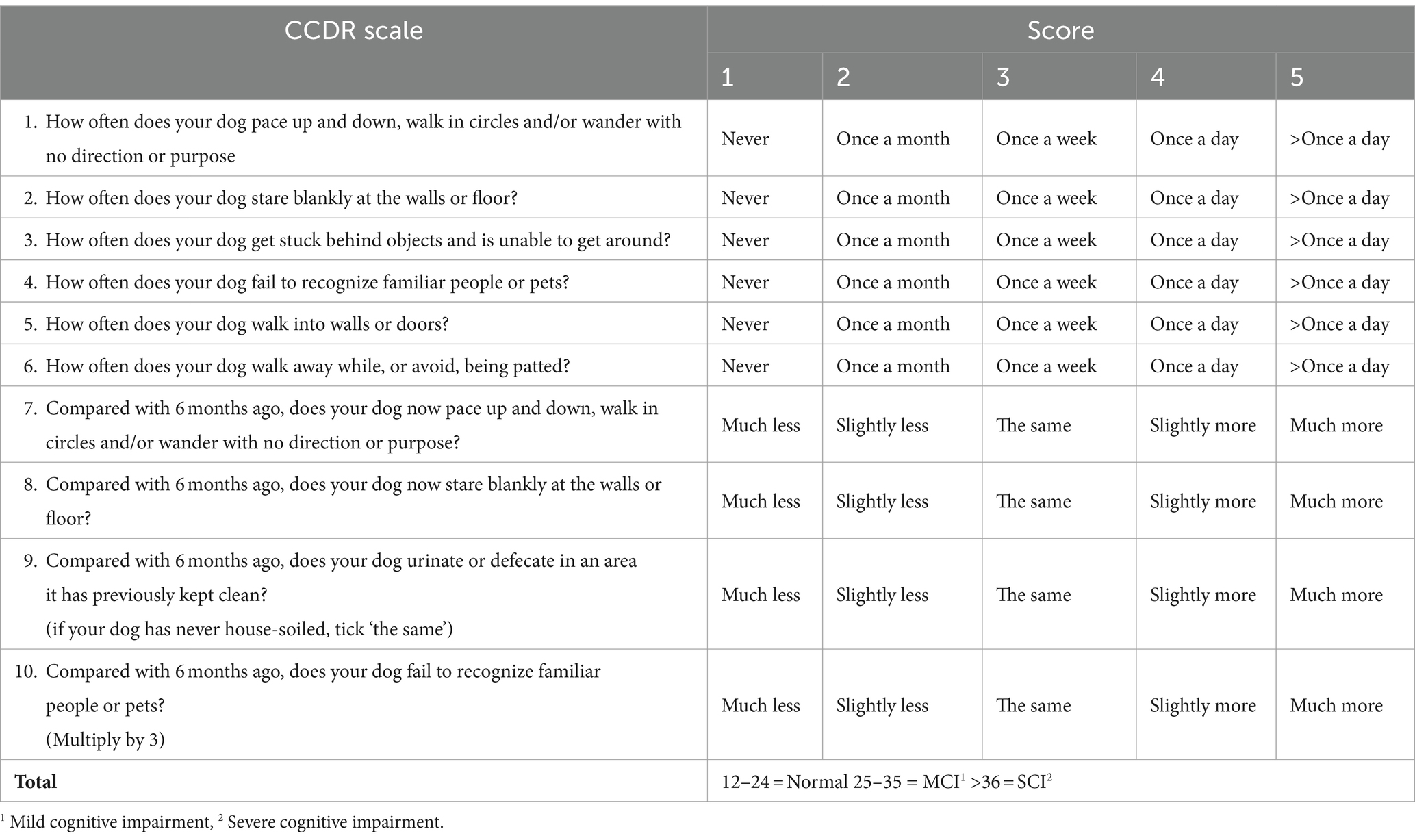
Mental decline in senior dogs can impact quality of life for the entire family. Signs of Cognitive Dysfunction Syndrome (CDS) can start to appear around eight years of age with many of the early and more subtle signs being missed. It is therefore important to educate dog owners on the signs and symptoms of CDS and to listen for any early indicators when taking a history.
Unfortunately, CDS is a progressive condition that cannot be cured; however, management strategies can alleviate symptoms and improve quality of life. This makes early recognition even more critical. There is no specific diagnostic test for CDS. A thorough behavioral assessment is necessary to evaluate for suggestive signs such as disorientation, disrupted sleep patterns, and loss of house training. Once other causes for these symptoms have been ruled out, specific evaluation of cognitive function should be performed. There are many questionnaires and scales available but the two we most commonly use at SAGDS are the Canine Cognitive Dysfunction Rating Scale (CCDR) and the Canine Dementia Scale (CADES).
5. Quality of life (QoL) assessment
Quality of life assessment should be a routine part of the history and examination of senior dogs. Incorporating a QoL assessment into the exam can be helpful for monitoring long-term trends and may help owners make difficult decisions using more objective data.
We recommend taking a holistic approach to evaluating a senior dog’s quality of life, which includes:
- Overall well-being: Assessing physical comfort, mental state, and social interactions.
- Daily functioning: Evaluating the dog’s ability to perform everyday activities and enjoy life.
- Owner’s perspective: Discussing owners’ observations of their dog’s happiness and distress.
There are a number of quality of life assessment tools available. One that we like was created by Dr. Alice Villalobos, a veterinarian who started Pawspice, a quality of life program for terminal pets. It’s called the HHHHHMM scale, which stands for Hurt, Hunger, Hydration, Hygiene, Happiness, Mobility, and “More good days than bad.” The dog is scored from 1-10 (10 being the best) in each category, and the sum is calculated. It can be helpful to both the veterinary team and pet parent to see the dog's situation in a more objective light.
Better care for senior dogs
As veterinarians who have dedicated our career to caring for senior dogs, we understand the joys and the challenges that come with treating dogs in their later years. Our goal in sharing these five clinical assessment tools is so that they can become part of your senior dog care programs. We can work together to improve the overall care of this unique patient population and help them live longer and healthier lives.
Want to become a senior dog certified vet? Visit the Senior and Geriatric Dog Society to learn more about our certification programs.